Business Reality
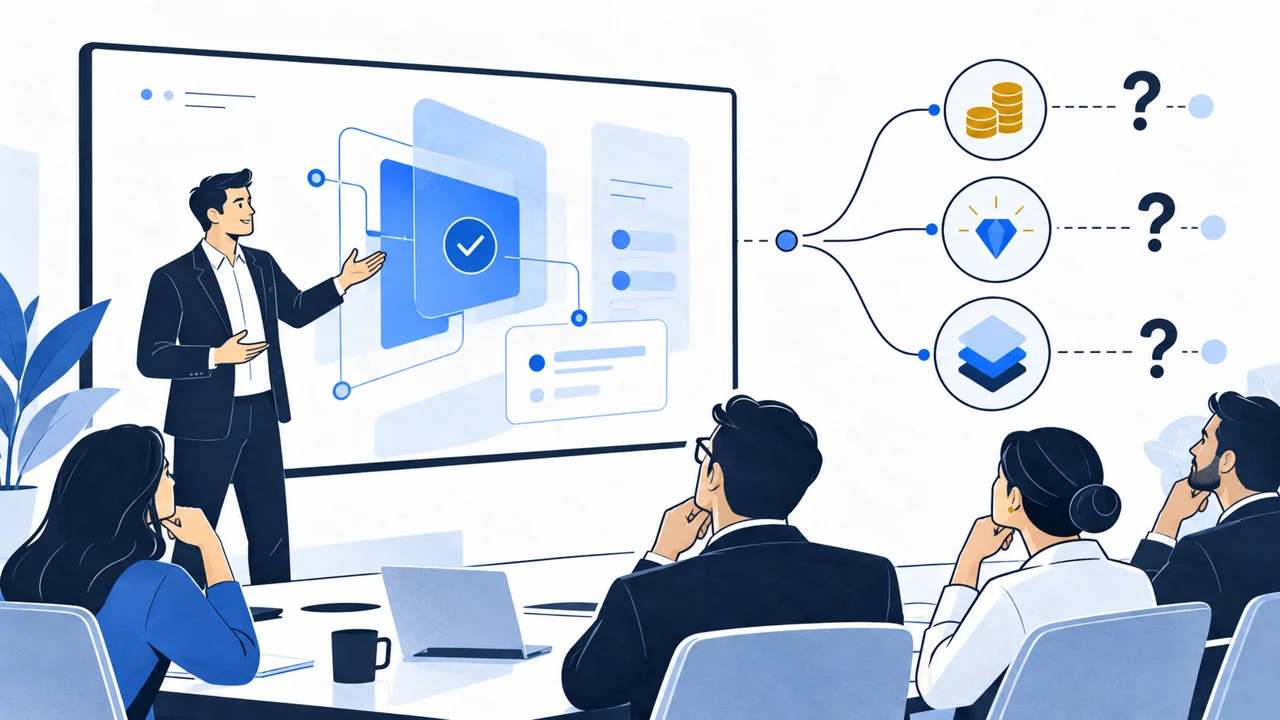
Too Much Planning. When Do We Actually Execute?
Foundations matter. But not every decision needs to wait until everything is perfect.
Read article ↗EDWIN REGA / Insights
Tech & Innovation
Model capability gets attention. Business value depends on the workflow, data, ownership, and human judgment around it.

Almost everything seems to be getting an AI feature. The chatbot needs AI. Request routing needs AI. Even the dashboard is expected to become considerably more intelligent by the next presentation.
One practical question deserves a place on the agenda: is the business process itself ready? If a request still travels around the organization looking for an owner, a capable model might simply move the uncertainty along faster.
That is not an argument for waiting until every process is perfect. Business processes evolve, and AI can create value during that evolution. The requirement is a clear operational objective, supported by controls that match the risk.
A demonstration usually follows a tidy path. Inputs are available, the question is clear, and the result appears immediately. Everyday operations contain exceptions, incomplete documents, changing policies, and users who do not all ask the same thing.
Define the problem before selecting the feature. Are we reducing information-search time, helping people draft responses, or improving request classification? These are different jobs, with different requirements and different measures of success.
Map the current workflow. Identify who submits a request, which systems are involved, who reviews the output, and what counts as completion. Include the less attractive questions: what happens when the answer is wrong, or the service becomes unavailable?
The map does not need to become an impressive wall decoration. It needs to reveal dependencies. If a later approval has no clear owner, making an earlier step faster may do little for the total time required to finish the work.
Check whether the required information exists, is relevant, is sufficiently current, and can legitimately be used. Fragmented data does not necessarily prevent a useful pilot. It does require explicit boundaries about what the pilot can reliably do.
Integration deserves equal attention. A useful answer that someone must copy into several applications can introduce a new administrative task. Decide where outputs go, which permissions are necessary, and how the process will be traced when something needs investigation.
Make human oversight concrete. Who checks the output? Which cases require escalation? Which actions must remain outside automatic execution? Saying that a human is in the loop does not help much if that person has neither time nor authority to intervene.
These questions also shape user expectations. People should understand whether they are receiving a suggestion, an answer that needs verification, or an action that has already been completed. Ambiguous interfaces can turn a technically limited experiment into an operational misunderstanding.
Establish a baseline before the pilot begins. Depending on the problem, that might include completion time, rework, output quality, or the effort required to find information. Collect measures that inform a decision, rather than everything that can fit on a dashboard.
Keep the initial scope controlled. Choose a defined type of work, involve users who can give useful feedback, and agree on a fallback when the system performs poorly. A pilot should create evidence, not an obligation to declare victory.
Compare results with the baseline, including review effort and operating costs. Faster generation is less meaningful if people spend the saved time correcting the output.
A proof of concept suggests that an approach may work. Production operation requires monitoring, failure handling, access management, user support, and an accountable service owner. Both stages matter. They simply answer different questions.
AI can help organizations learn while improving an evolving process. We need clarity about the problem and the boundaries of delegated decisions, rather than an illusion of complete readiness.
Intelligent technology should help people work smarter. It should not have to guess a business process nobody has agreed upon.
Business Reality
Foundations matter. But not every decision needs to wait until everything is perfect.
Read article ↗Innovation & Commercialization
The technology works. Users are happy. The demo is successful. But when commercial discussions begin, progress suddenly slows down.
Read article ↗